
Flower Friday – Creeping Jenny
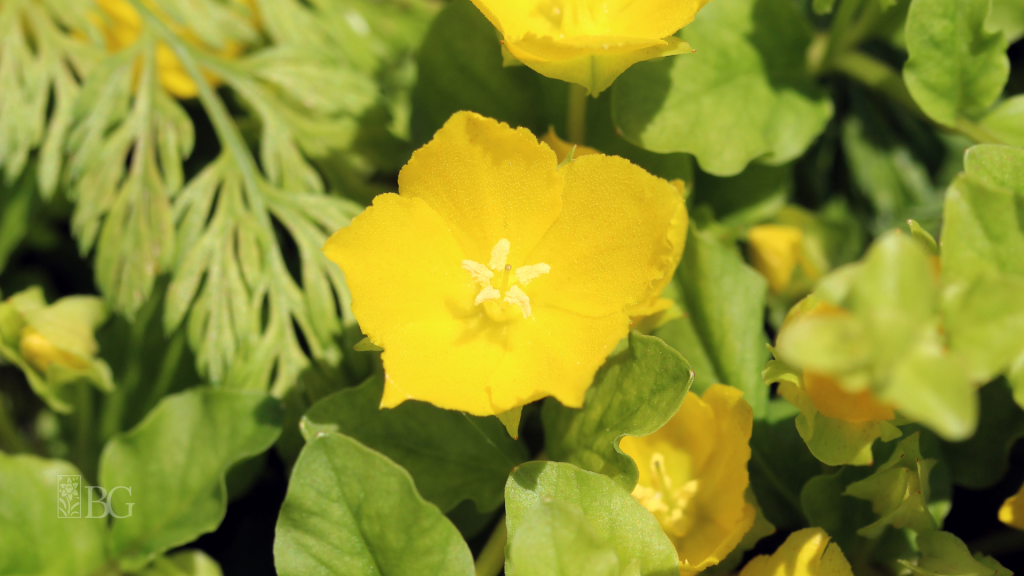
Groundcover That Works: Planting and Managing Creeping Jenny in Coastal Gardens
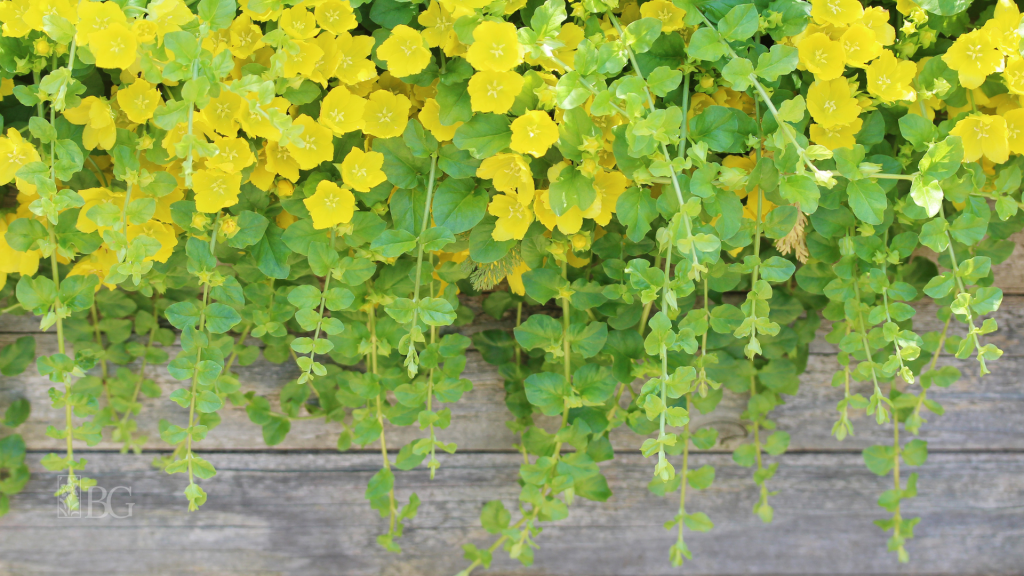
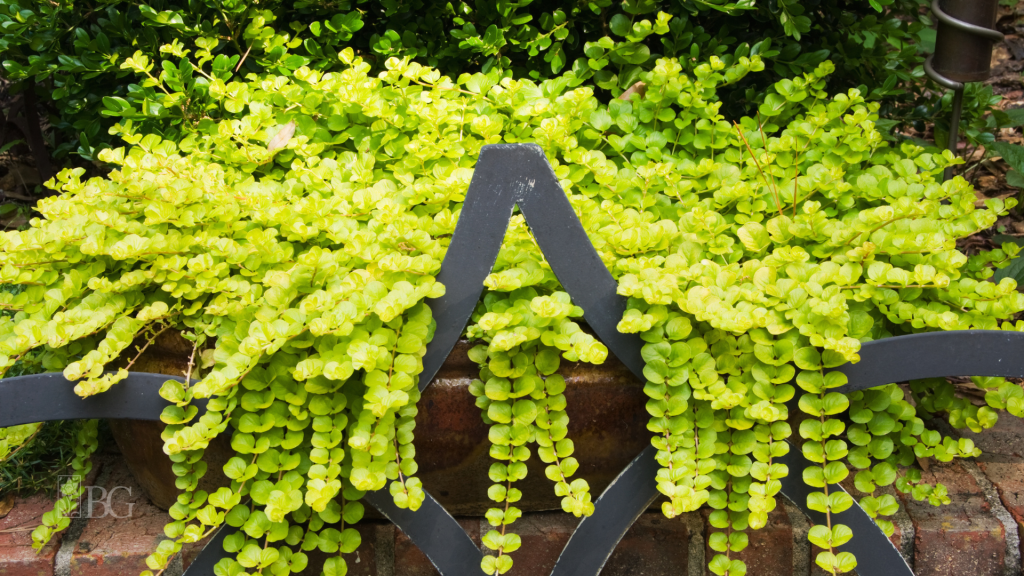
Creeping Jenny (also called moneywort) is a fast-moving groundcover with round leaves that knit into a bright carpet—golden-chartreuse on popular cultivars and glossy green on the species. In our coastal climate, it excels in moist soils, spills beautifully from containers and walls, and threads between stones to soften hard edges. The key is placement and routine edging: give it the right job and a defined boundary, and it becomes one of the easiest ways to add colour and cohesion to beds and paths.
Quick Facts
- Botanical: Lysimachia nummularia (and cultivars like ‘Aurea’, ‘Golden Creeping Jenny’)
- Habit & size: Prostrate mat; runners 2–10 cm tall, spread 60–120+ cm
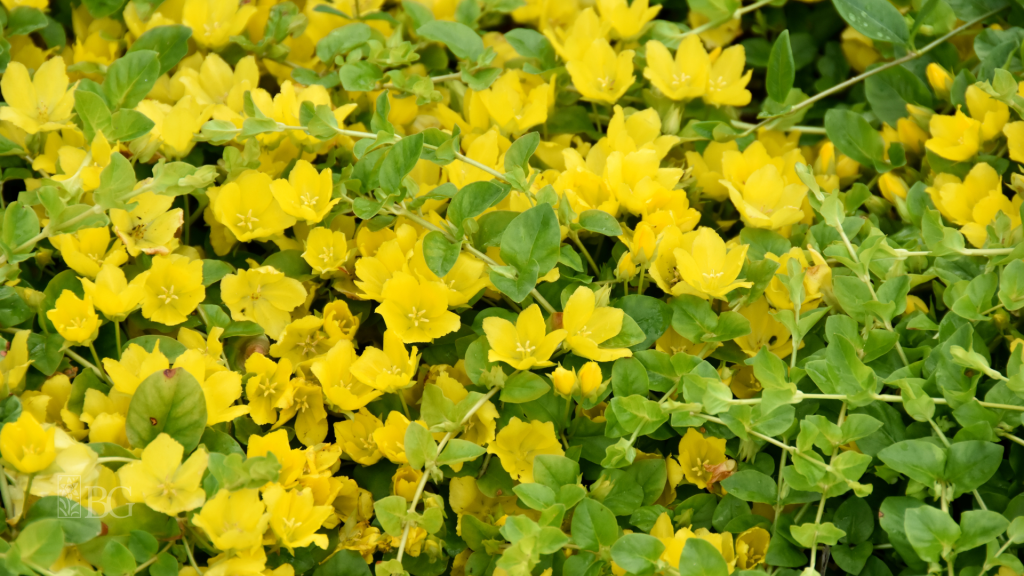
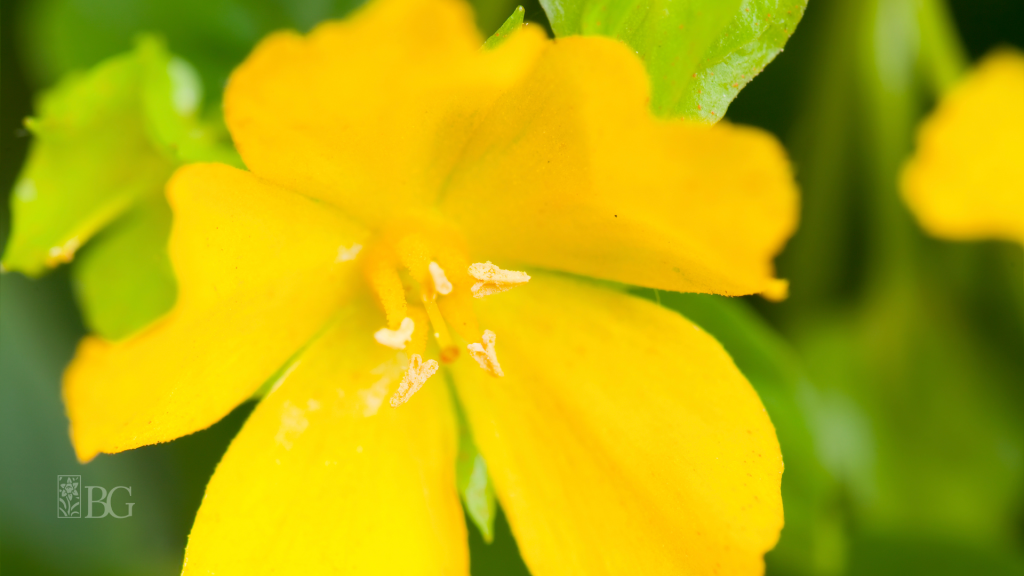
- Colour & bloom: Chartreuse to green foliage; small yellow cup flowers in early–mid summer
- Light: Sun to part shade (best colour with morning sun; afternoon shade reduces scorch)
- Soil: Moist, well-drained; thrives in rich loam and near water features
- Water: Likes consistent moisture; tolerates brief dry spells once established
- Hardiness: USDA Zone 3–9 (fully hardy here)
- Use cases: Groundcover, path edges, rock crevices, rain gardens, containers, cascading over walls
Where It Shines Here (and where it doesn’t)
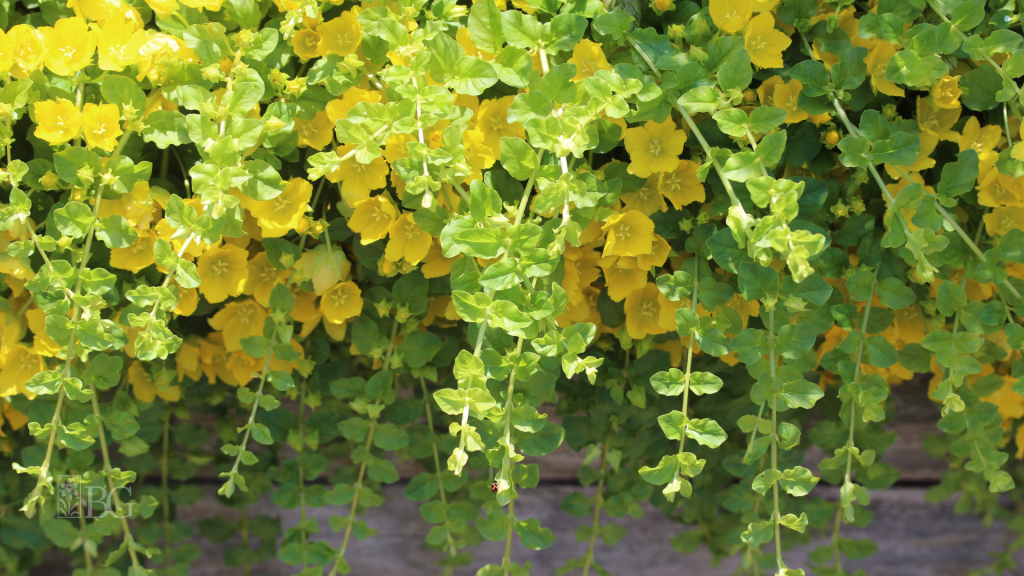
In St. John’s, reliable rainfall and cool summers keep Creeping Jenny fresh and luminous, especially the golden forms that can fade or scorch in hotter regions. It’s superb around stepping stones, at the front of borders, and in containers where its runners drape like a soft fringe. Avoid planting it directly into highly fertile, constantly irrigated beds without a boundary—the extra push can turn “vigorous” into “everywhere.”
Site & Soil
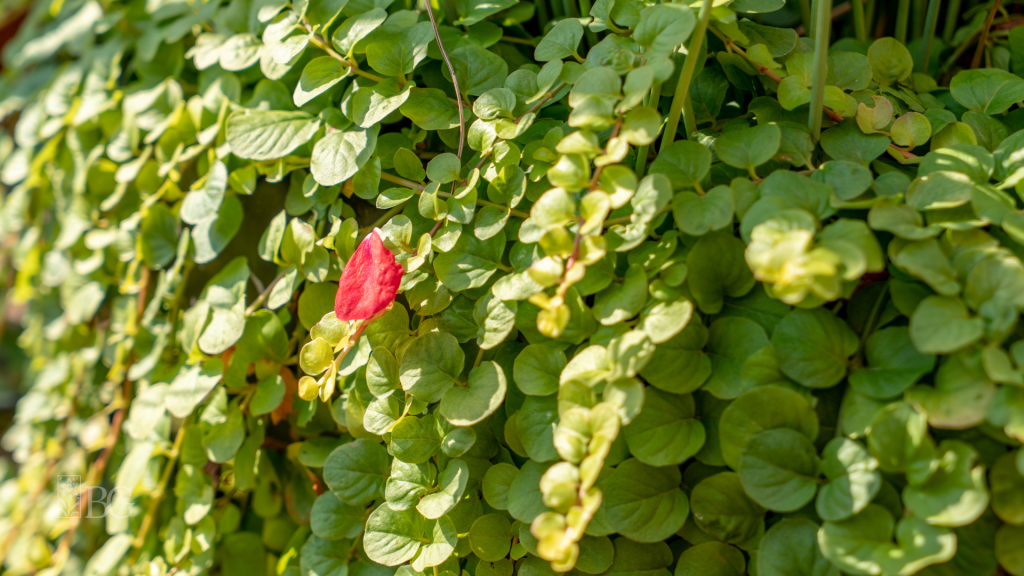
Aim for morning sun with afternoon shade for chartreuse cultivars; full shade deepens the green and reduces glow, while full afternoon sun can cause leaf scorch on dry sites. Soil should be moist, humus-rich, and free-draining—think compost-improved loam. Around downspouts, pond edges, or low swales, it thrives and helps knit the surface, reducing erosion.
Planting (spring or early autumn)
Set plugs or small pots 25–30 cm apart so runners meet within one season. Plant crowns level with surrounding soil and firm gently. Water deeply to settle in, then mulch lightly with 2–3 cm of fine compost or leaf mould (keep mulch off the crowns). Autumn plantings need 6–8 weeks before the ground freezes; spring plantings establish quickly once nights warm.
Care Calendar (simple and consistent)
- Spring (April–May): Top-dress with compost; check edges and re-establish boundaries.
- Early summer (June): Water during dry spells (about 20–25 mm/week). Lightly shear after flowering for a tidy, denser mat.
- High summer (July–August): Spot-water containers and wall planters; trim runners that jump paths or step into neighbouring perennials.
- Autumn (Sept–Oct): Final edge trim along paths and bed lines; reset any pavers the mat has lifted.
- Winter: Semi-evergreen under snow; no protection needed. Clean up winter-burned leaves in early spring.
Edging, Pruning & Division (the control toolkit)
Creeping Jenny stays polite with regular edging. Once a month in peak growth, slice runners along paths with a half-moon edger or sharp spade and lift the trimmed fringe. A quick post-bloom shear tightens the carpet and encourages fresh leaves. For renewal or sharing plants, lift a section in spring or early autumn, divide by hand into palm-sized pieces with roots attached, and replant at original depth. In containers, a mid-season haircut keeps the cascade dense and prevents tangling.
Water & Nutrition (more isn’t better)
This plant loves moisture, not soggy, airless soil. Water when the top few centimetres are dry; in beds that stay damp naturally, you may not need supplemental irrigation. Feeding is minimal—an annual compost top-dress is typically enough. High nitrogen pushes soft, sprawling growth, so skip heavy fertilisers.
Problems and Fast Fixes
- Leaf scorch: Too much afternoon sun plus dryness; shift to morning sun/afternoon shade and improve watering.
- Thinning mats: Excess shade or poor soil; shear lightly, add compost, increase light if possible.
- Overrun edges: Increase edging frequency; create a physical barrier (steel/aluminium edging, shallow paver strip).
- Root rot/algae at pond margins: Improve water movement and reduce standing water on the crown; replant slightly higher.
- Slugs/snails on lush mats: Hand pick; encourage airflow and avoid heavy, wet mulches.
Design Uses (how we actually deploy it)
- Path & stone joints: Threads between slabs, softens lines, and tolerates light foot brush.
- Rain gardens & swales: Handles periodic wet, knits soil, and adds warm colour.
- Container skirts: Spills over rims of pots, troughs, and walls; pairs well with dwarf conifers and hostas.
- Front-of-border ribbon: A bright line that ties mixed plantings together without visual weight.
Pairs well with: hostas, heucheras, ferns, astilbe, Japanese forest grass, small conifers, and spring bulbs that rise through the mat.
Cultivars to Consider
- ‘Aurea’ / ‘Golden Creeping Jenny’: Eye-catching chartreuse; brightest with morning sun and even moisture.
- Species (green form): More shade-tolerant, slightly less showy but very durable.
- Variegated selections (occasionally available): Slower spread, softer colour; good for containers.
Propagation (quick and reliable)
It roots wherever nodes touch soil. For tidy propagation, take 5–10 cm runners with a few nodes in spring, press into moist potting mix, and keep evenly damp until new growth thickens. Divisions re-establish quickly in cool weather.
You can consult with our team at Bowering Gardens, lawn and garden experts in St. John’s, Newfoundland, to determine the best practices for your specific region and landscaping, or you can reach out to us below to get a quote so that we can take it off your hands entirely.
Please note that the information provided in this article is based on general guidelines. Specific care and conditions may vary for different varieties and individual gardens.
Frequently Asked Questions
Edge monthly during peak growth, lift trimmed fringes, and consider a shallow paver or metal edging strip that presents a clean, physical line it can’t easily cross.
Yes, but colour shifts deeper green and growth slows. For the bright chartreuse look, give morning sun and afternoon shade with steady moisture.
Absolutely—moist ground suits it. Keep crowns just above saturated soil and ensure light water movement so crowns aren’t waterlogged.
Yes. It is fully hardy in St. John’s, semi-evergreen in mild spots, and rebounds quickly each spring.
It can, if left unchecked. Give neighbouring plants a small moat of bare soil and edge regularly; in tight borders, keep Creeping Jenny in containers or between hardscape.
Remember, gardening is not only about nurturing plants but also about embracing the joy and wonder that nature brings. Happy gardening!
Posted on
Posted in Blog
