
Flower Friday – Goldenrod (Solidago)
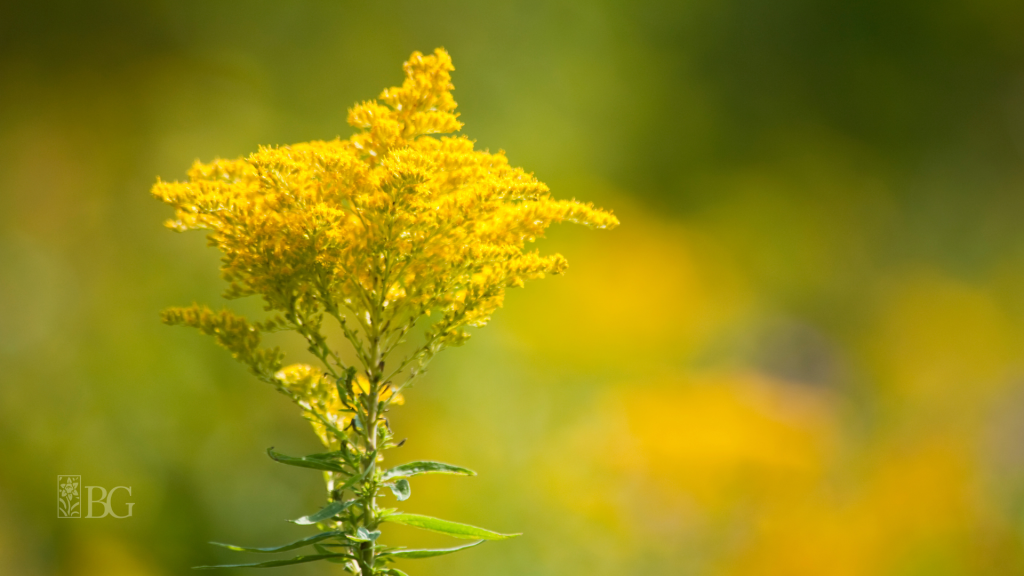
Goldenrod: A Late-Season Essential for St. John’s Gardens
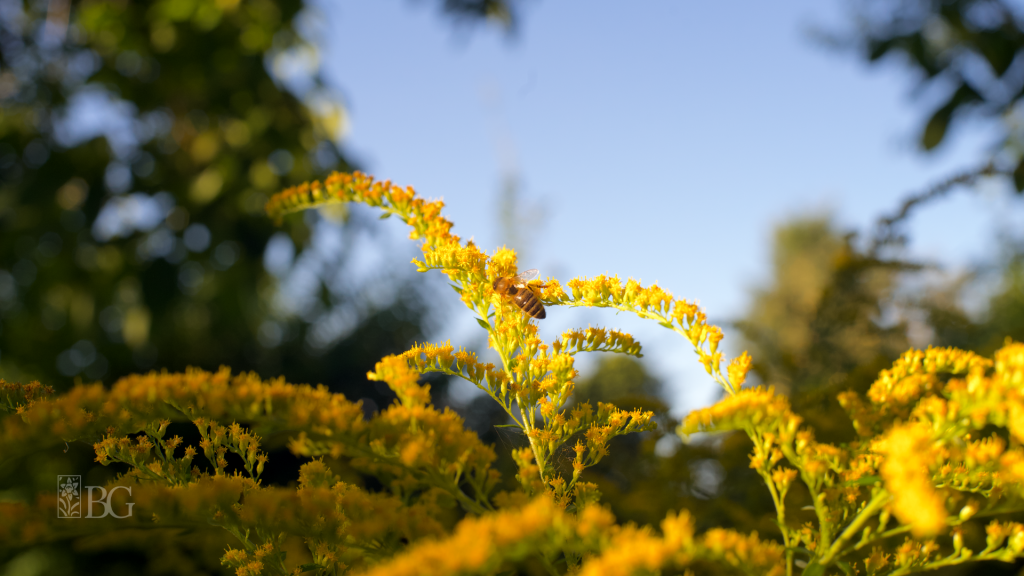
Goldenrod (Solidago spp.) carries the garden from late summer into autumn with upright wands of saturated yellow. In St. John’s, where cool air and regular rainfall extend the season, goldenrod is reliable, wind-tolerant, and attractive to bees and butterflies preparing for winter. Its pollen is insect-carried, not wind-borne, so it isn’t the cause of hay fever—ragweed is.
Quick Facts (at a glance)
- Height & spread: 60–150 cm tall × 45–75 cm wide (species/cultivar dependent)
- Bloom time: Late August–October
- Light: Full sun to light shade (best bloom with ≥6 hrs sun)
- Soil: Well-drained, average garden soil; tolerates clay once established
- Water: Moderate; drought-tolerant after year one
- Hardiness: Typically USDA Zone 3–8 (fully hardy in St. John’s)
- Wildlife: High-value nectar and late pollen for native pollinators
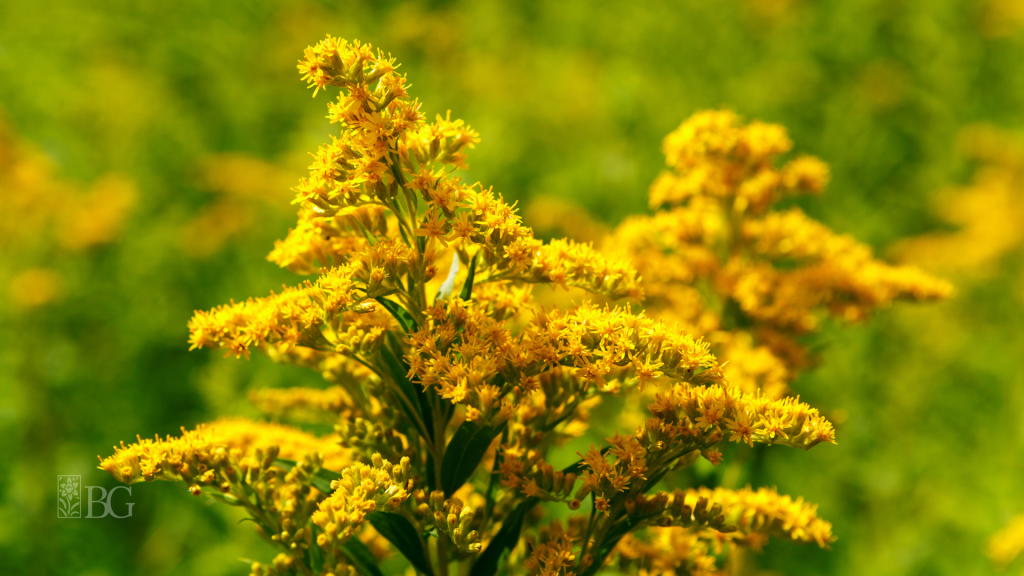
Site and Soil (choose well once, work less later)
Goldenrod is forgiving, but performance improves with a sunny, open position and soil that drains after rain. In Newfoundland’s maritime climate, heavy soils are common; work in compost to improve texture without making the site overly rich. Excess fertility pushes leafy growth and floppier stems, so aim for “moderately fertile” rather than lush.
Planting (spring is easiest, autumn is excellent)
- Timing: Plant in spring once soil is workable, or in early autumn with 6–8 weeks before freeze-up.
- Spacing: 45–60 cm for compact types; up to 75 cm for tall forms to maintain airflow.
- Depth: Set crowns level with surrounding soil; firm lightly and water deeply.
- Mulch: 5 cm organic mulch after planting, pulled back from stems to prevent rot.
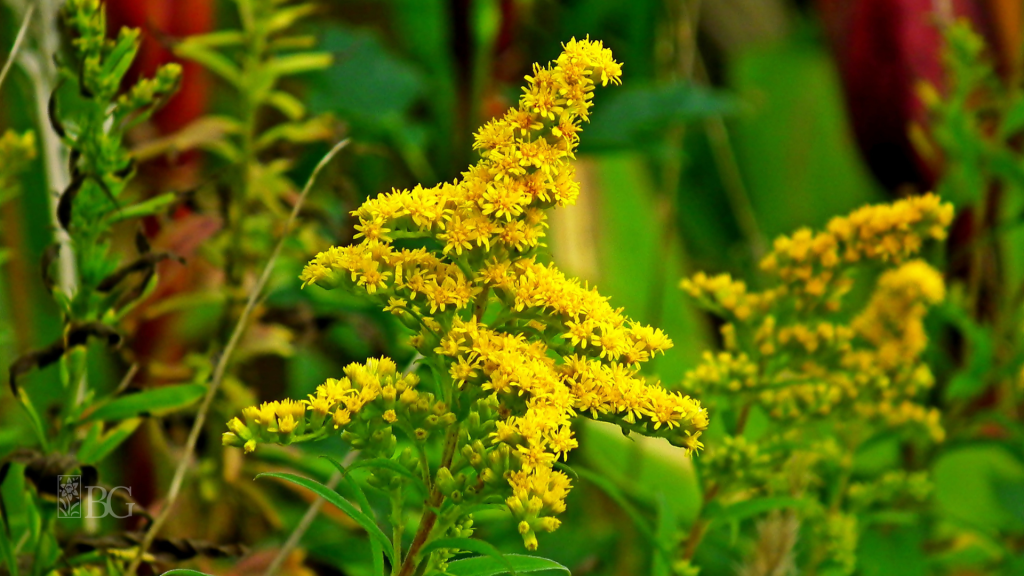
Care Calendar (condensed and practical)
- Spring (April–May): Top-dress with compost; stake tall cultivars in windy sites if needed.
- Early Summer (June): Pinch or shear stems by one-third before buds form to reduce height and delay bloom for a denser, tidier display.
- High Summer (July): Water during dry spells (about 25–30 mm/week); no heavy feeding.
- Autumn (Sept–Oct): Optional deadheading to limit self-seeding; leave some seedheads for birds.
- Late Autumn (Nov): Cut stems to 10–15 cm once brown, or leave standing for winter habitat and cut back in early spring.
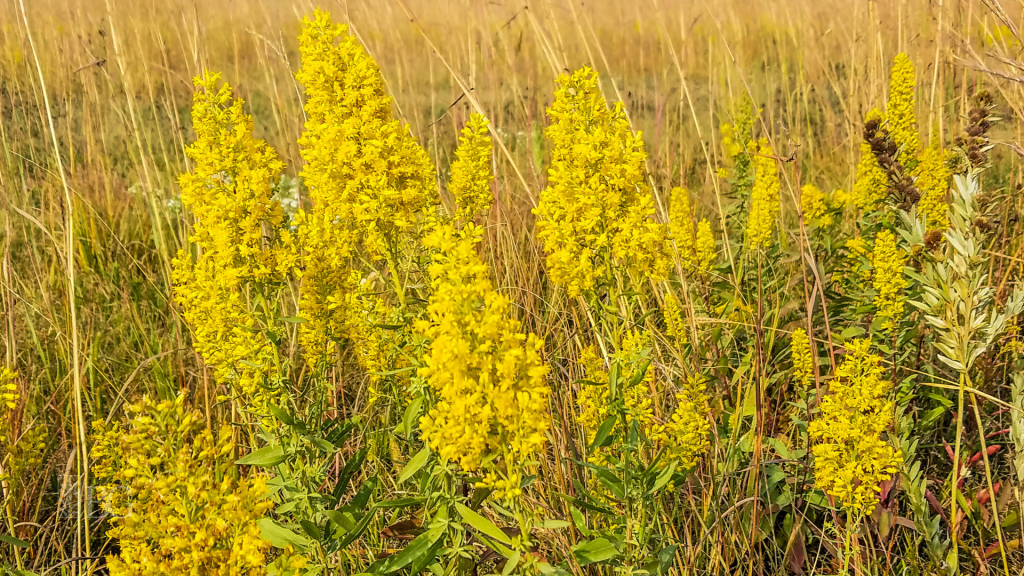
Pruning and Division (keep it vigorous, keep it in bounds)
Goldenrod responds well to timely pruning. A June pinch (before flower buds show) produces stockier plants with less lodging in wind and rain—useful near the coast. After flowering, you can deadhead to manage self-seeding without affecting plant health.
Clumps slowly thicken over 3–4 years. Divide in early spring as new growth emerges:
- Lift the clump with a spade, keeping roots intact.
- Slice into hand-sized divisions, each with several shoots and healthy roots.
- Replant divisions at original depth, spacing as above; water to settle soil.
Division restores vigour, improves airflow, and gives you plants for other beds.
Water, Nutrition, and Lodging (the “too much” rules)
- Water: First year—keep evenly moist. After establishment—water only during extended dry spells.
- Fertilizer: Avoid high-nitrogen products; compost in spring is enough.
- Lodging (flopping): Sun, spacing, and the June pinch are your three best tools; in very exposed sites, a discrete ring stake on tall forms helps.
Pests, Diseases, and the Allergy Myth
Goldenrod is notably resilient. Powdery mildew can appear in crowded, shaded plantings—solve with spacing and sun. Leaf spot is cosmetic. Aphids are occasional and short-lived when beneficial insects are present. And the myth: goldenrod’s pollen is heavy and insect-carried; it does not cause hay fever.
Design Uses (where it shines)
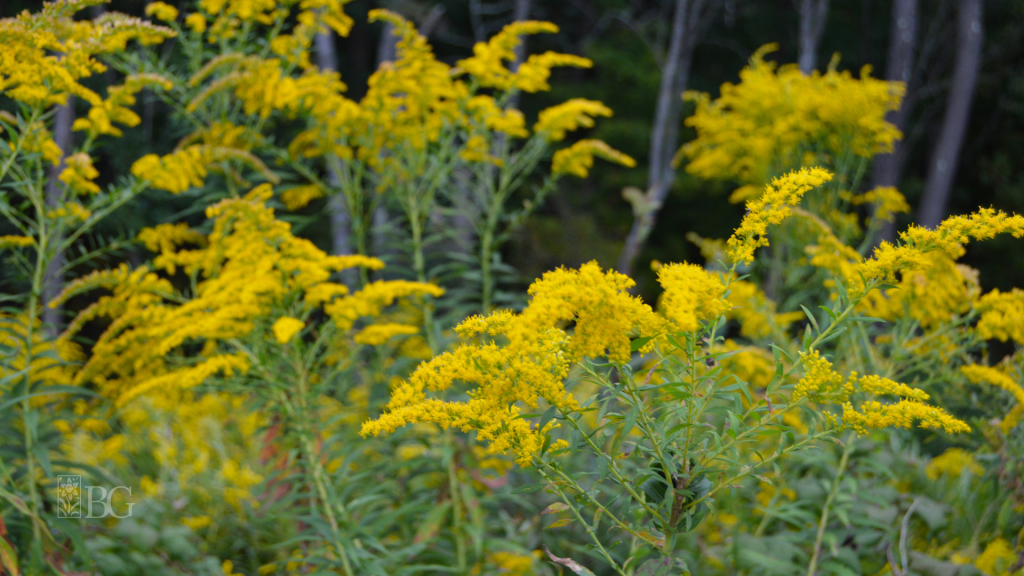
- Pollinator borders: Pair with New England asters, sedums, and ornamental grasses for a classic late-season matrix.
- Naturalistic plantings: Let clumps weave through meadow-style beds for movement and colour.
- Small gardens: Choose compact, clump-forming cultivars to avoid spread while keeping the glow.
Cultivars to Consider (compact to tall)
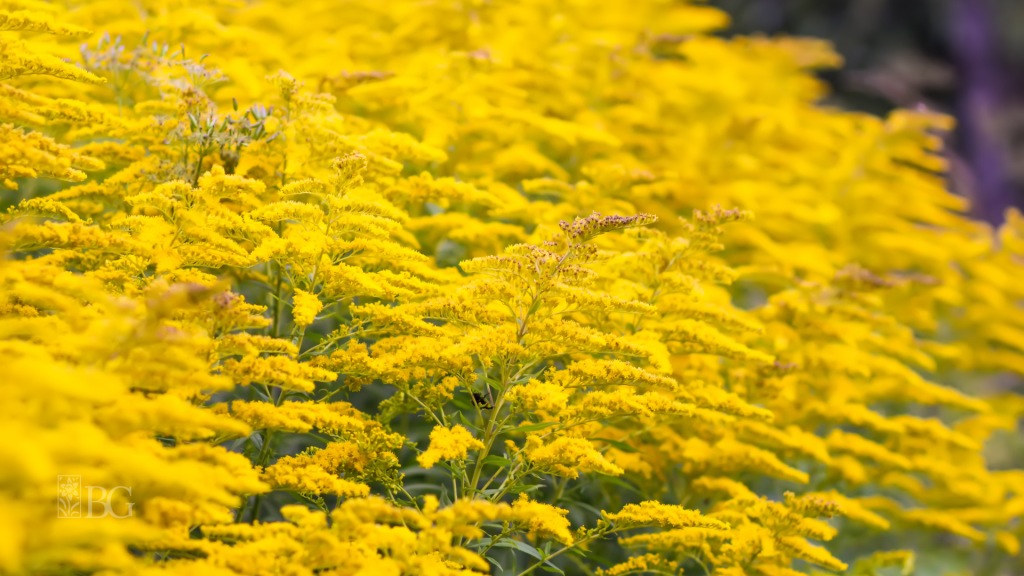
- ‘Little Lemon’ / ‘Dansolitlem’ (~40–50 cm): Very compact, bright lemon-yellow plumes; excellent for front borders and containers.
- ‘Golden Fleece’ (~45–60 cm): Low, arching habit with dense sprays; good filler without overwhelm.
- ‘Fireworks’ (~90–120 cm): Thread-like wands radiate from upright stems—dramatic but tidy.
- Canada goldenrod types (taller, 120–150 cm): Best for naturalistic spaces; use division and deadheading to manage spread.
You can consult with our team at Bowering Gardens, lawn and garden experts in St. John’s, Newfoundland, to determine the best practices for your specific region and landscaping, or you can reach out to us below to get a quote so that we can take it off your hands entirely.
Please note that the information provided in this article is based on general guidelines. Specific care and conditions may vary for different varieties and individual gardens.
Frequently Asked Questions
Typically late August through October. Cool nights and steady moisture intensify colour and extend the display.
Clump-forming cultivars stay put; spreading species enlarge more quickly. Choose compact selections for small beds and deadhead after bloom to reduce self-seeding.
No. Goldenrod’s pollen is heavy and insect-carried. Ragweed blooms at the same time and is wind-pollinated—that’s the usual trigger for hay fever.
Every 3–4 years in early spring. Division keeps the centre from thinning, reduces disease pressure, and maintains upright growth.
Yes, but expect fewer flowers and a looser habit. In St. John’s, light shade still performs well, yet full sun gives the densest plumes.
Remember, gardening is not only about nurturing plants but also about embracing the joy and wonder that nature brings. Happy gardening!
Posted on
Posted in Blog
