
Flower Friday – Russian Sage (Salvia yangii)
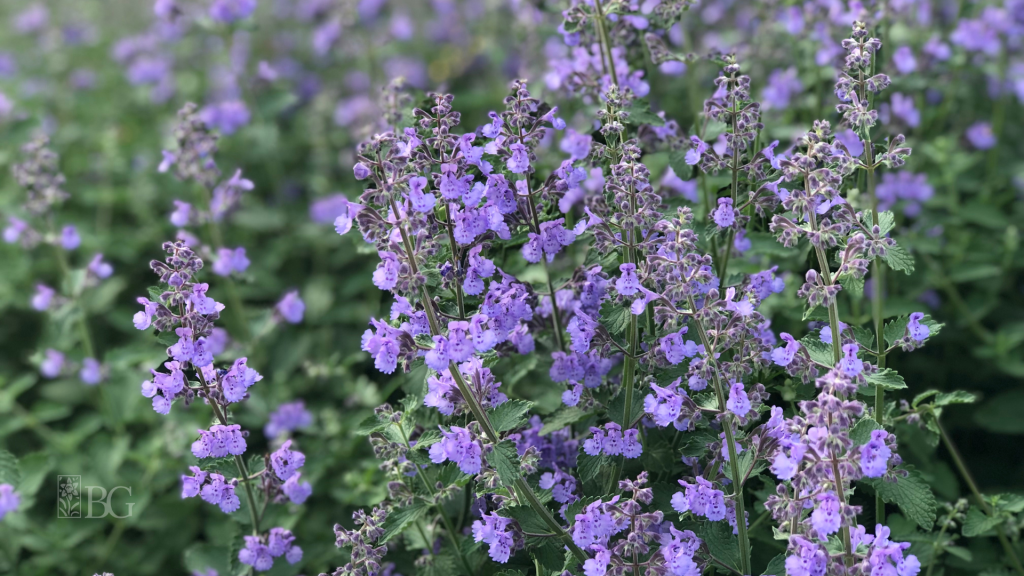
Russian Sage in St. John’s: Blue Haze That Carries the Bed into Frost
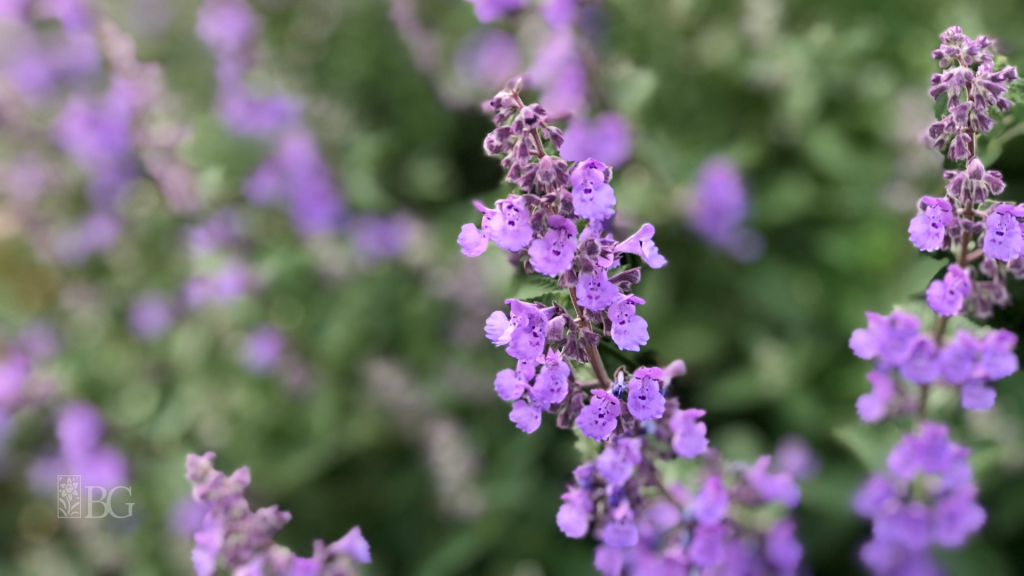
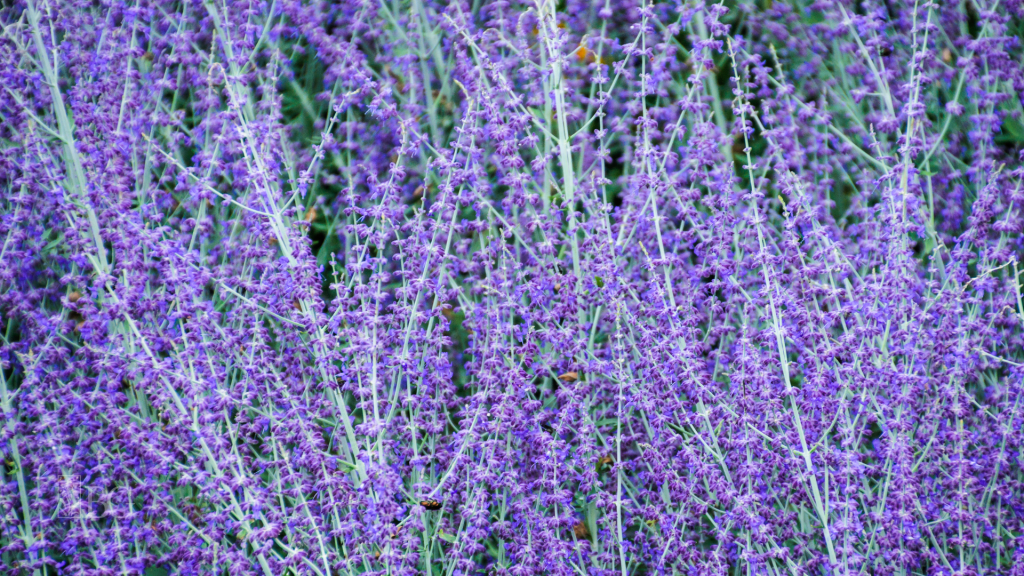
Russian sage (botanically updated to Salvia yangii, formerly Perovskia atriplicifolia) brings a long, cool stream of lavender-blue to borders just when many perennials fade. Airy flower wands, silver stems, and aromatic foliage create a see-through effect that reads as colour and light rather than a heavy block. In our climate—wind off the ocean, cool nights, and often lean soils—Russian sage is easy, drought-tolerant once established, and reliably upright if you give it full sun and drainage.
Quick Facts
- Height & spread: 70–120 cm tall × 60–90 cm wide (dwarf forms 50–80 cm)
- Bloom window: Mid-summer to frost (often July–October here)
- Sun & exposure: Full sun (≥6 hours); loves heat reflected from stone or gravel
- Soil: Free-draining, even poor or sandy; avoid heavy, wet clay
- Water: Light once established; regular moisture the first season
- Hardiness: USDA Zone 4–9 (fully hardy locally)
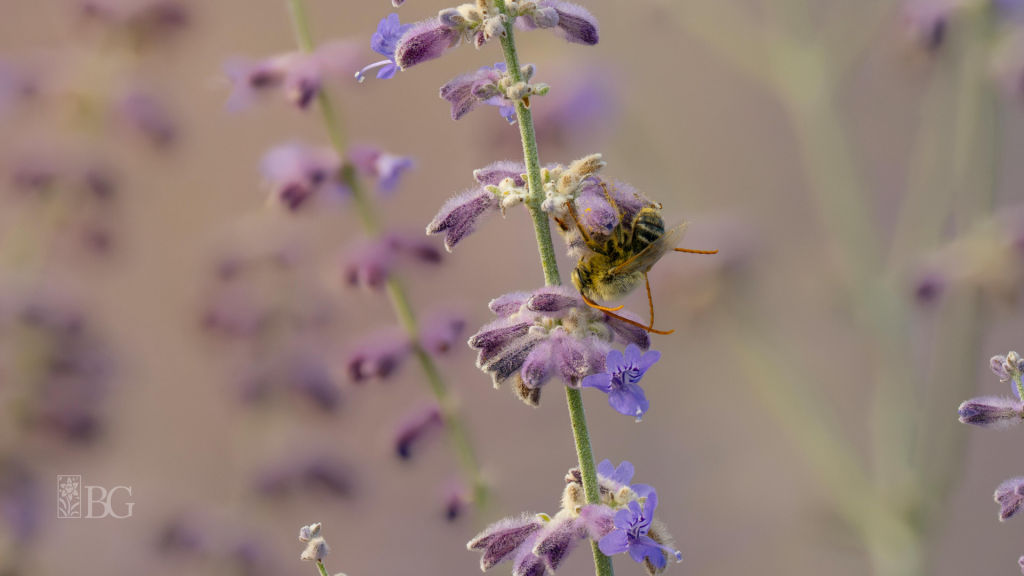
- Wildlife: Excellent for bees; deer and rabbits typically avoid it
- Scent: Clean, resinous foliage; good in cut stems and dried arrangements
Why It Works Here (and why we plant or showcase it mid-October)
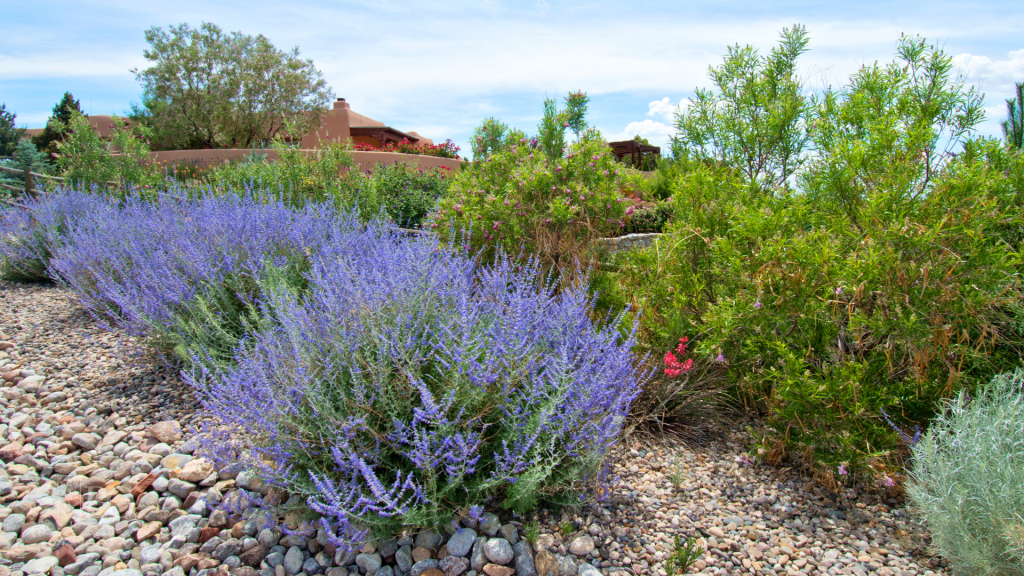
By 17 October, many borders are down to seedheads; Russian sage is still carrying a soft blue haze and silver structure, especially in sunny, wind-washed beds. It likes what St. John’s naturally offers—drying breezes, leaner soils, cool nights—and resents what we try to “improve”: rich compost and constant watering. Give it sun, space, and drainage, and it will repay you with months of colour and a winter silhouette worth keeping until spring.
Site, Soil, and Spacing
Choose the sunniest, most free-draining part of the garden—gravelly paths, raised borders, or a slope are perfect. Russian sage dislikes winter-wet crowns; in heavier pockets, work in coarse grit 10–15 cm deep and mound the planting area slightly so meltwater runs off. Space 60–90 cm apart for airflow and to keep stems from leaning into neighbours. A thin gravel or stone mulch is better than heavy organic mulches, which can hold unwanted moisture against the crown.
Planting (spring or early autumn, not into a bog)
Set transplants in spring once the soil has warmed, or in early autumn while the ground is still warm—aim for at least 6 weeks before freeze-up for rooting. Plant crowns level with the surrounding soil, firm gently, and water in well. In the first growing season, water when the top few centimetres of soil dry; after that, ease off—excess water and fertility encourage flop.
Care Through the Season (lean and bright wins)
Russian sage is a low-input plant when sited correctly. Skip high-nitrogen feeds; a light top-dress of compost in spring is plenty. In exposed beds that funnel wind, consider a single early-summer pinch (remove 3–5 cm of soft growth in late June) on taller types to thicken stems and reduce lodging. Otherwise, let it run. If stems ever lean after a gale, a discreet ring support early in the season is all you’ll need the next year.
Pruning and Renewal (do it once—and in spring)
Leave stems standing over winter. They protect the crown, trap snow, and offer structure. In early spring—as new shoots show at the base—cut last year’s stems down to 15–20 cm above ground. Avoid cutting to the ground in autumn; it exposes the crown to wet/freeze cycles. Every 4–5 years, if clumps become woody or thin in the middle, shear hard in spring and re-site a few divisions into fresher, grittier soil.
Problems and Fast Fixes
- Flopping: Usually shade or rich soil. Move to full sun and lean the soil with grit; consider a June pinch on tall cultivars.
- Winter loss: Crown sat wet. Plant higher, add drainage, switch to gravel mulch.
- Poor bloom: Not enough sun or over-feeding; reduce nitrogen, increase light.
- Pests/disease: Rare here; aromatic foliage deters browsing, and stems are untroubled in wind.
Design Uses (why it belongs in the mix)
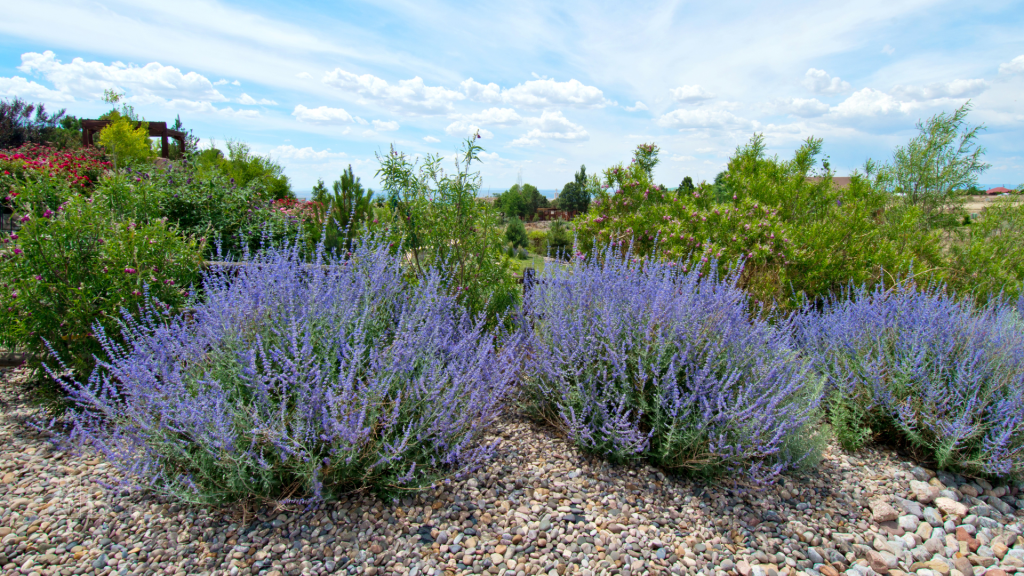
Thread Russian sage through late-season partners to create depth without bulk. It reads as atmosphere: blue against tawny grasses, silver against dark evergreens, and a soft veil over warm hues.
Pairs well with:
- Grasses: Calamagrostis ‘Karl Foerster’, Panicum ‘Northwind’
- Perennials: rudbeckia, echinacea, sedum, asters, yarrow
- Shrubs: dwarf spirea, boxwood balls, low junipers (contrast in texture and mass)
Use dwarfs along paths and the taller forms as a mid-border “cloud” behind compact daisies and salvias.
Cultivars to Consider (by habit)
- Sturdy mid-size (70–90 cm): ‘Denim ’n Lace’ (dense, upright wands), ‘Rocketman’ (clean habit, true lavender).
- Compact (50–80 cm): ‘Little Spire’, ‘Blue Jean Baby’—great for smaller gardens and windy corners.
- Classic tall (90–120+ cm): ‘Blue Spire’—best in hot, stony sites with full exposure.
Propagation (choose method for fidelity)
Seed will vary; use semi-ripe cuttings in mid-summer from non-flowering shoots for true-to-type plants. Division is possible on younger clumps in early spring but can be tough on older woody crowns—lift carefully, keep a large root ball, and replant high into gritty soil.
You can consult with our team at Bowering Gardens, lawn and garden experts in St. John’s, Newfoundland, to determine the best practices for your specific region and landscaping, or you can reach out to us below to get a quote so that we can take it off your hands entirely.
Please note that the information provided in this article is based on general guidelines. Specific care and conditions may vary for different varieties and individual gardens.
Frequently Asked Questions
As much as you can give it—full sun all day is ideal. In less than 6 hours, expect weaker stems and fewer flowers.
They shield the crown from wet and freeze–thaw, and the silver framework looks good in frost. Cut back in early spring to 15–20 cm when new shoots show.
Yes—wind is usually an asset, keeping foliage dry and upright. Just avoid pockets where water sits in winter.
Not beyond a light spring top-dress. Rich soil makes it floppy. It’s a plant that prefers “lean and bright.”
Choose compact, upright options like ‘Little Spire’ or ‘Denim ’n Lace’ and plant into a gritty, raised spot for drainage and height control.
Remember, gardening is not only about nurturing plants but also about embracing the joy and wonder that nature brings. Happy gardening!
Posted on
Posted in Blog
