
Flower Friday – Allium
Allium Gardening in St. John’s, Newfoundland: Guide to Growing Ornamental Onions
Introduction to Alliums
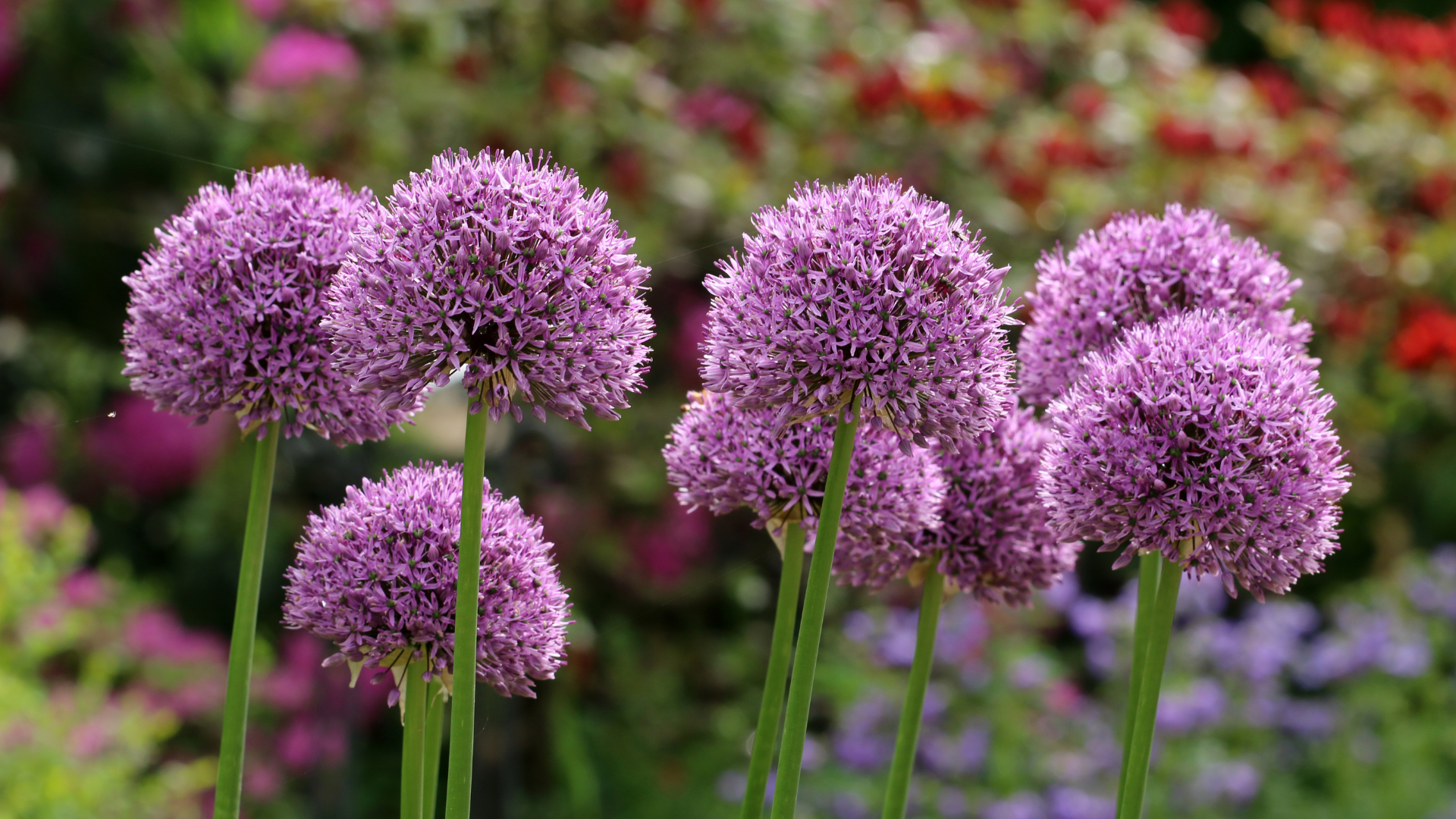
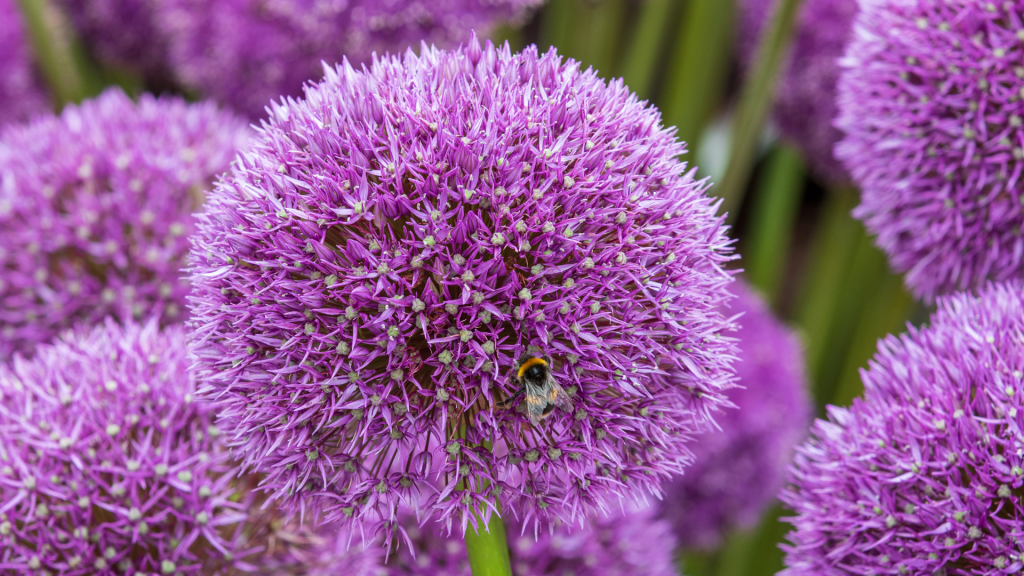
In the sometimes challenging climate of St. John’s, Newfoundland, the resilient and striking allium can add a unique charm to your garden. With names like ‘Gladiator’, ‘Goliath’, and ‘Globemaster’, ornamental onions deliver a powerful punch with their globe-shaped blooms made of densely packed flowers. These perennial plants offer a delightful combination of ease and beauty, fitting seamlessly into both meadow gardens and formal borders. Their ability to pair well with other perennials and return reliably each year makes them an excellent choice for any gardener.
Planting Allium Bulbs
When and How to Plant
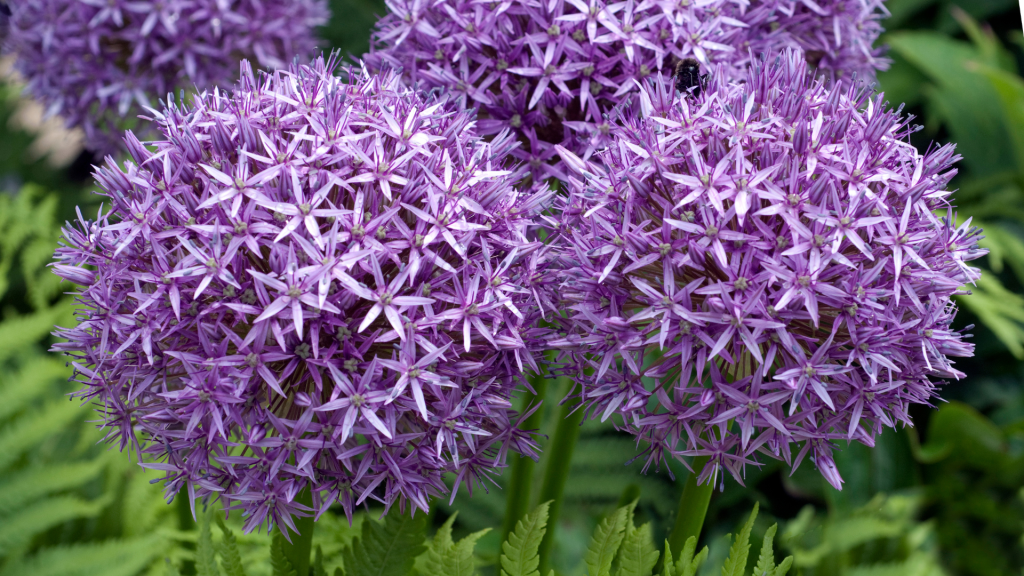
Timing: Plant allium bulbs in the fall, a few weeks before the ground freezes. This timing ensures they establish roots before winter, leading to robust growth in the spring.
Depth and Spacing: Plant bulbs twice as deep as the bulb is tall, with the pointy end facing up. Space them according to their mature size—generally, this means about 6-8 inches apart for smaller varieties and up to 12 inches for larger ones.
Soil: Alliums are tolerant of various soil types but prefer well-drained soil. Avoid planting in areas prone to waterlogging, especially during their dormant period, as this can lead to bulb rot.
Care and Maintenance of Alliums
Watering
During the growing season, provide alliums with evenly moist soil, ensuring it’s not soggy. Reduce watering during the dormant season to prevent rot.
Fertilizing
Add bone meal to the planting area during planting. In subsequent years, top-dress with compost to maintain soil health and promote vigorous growth.
Post-Bloom Care
Allow the foliage to die back naturally after blooming. The leaves provide essential nutrients to the bulbs for the next season’s blooms. Plant alliums among perennials to hide the fading foliage.
Staking and Pests
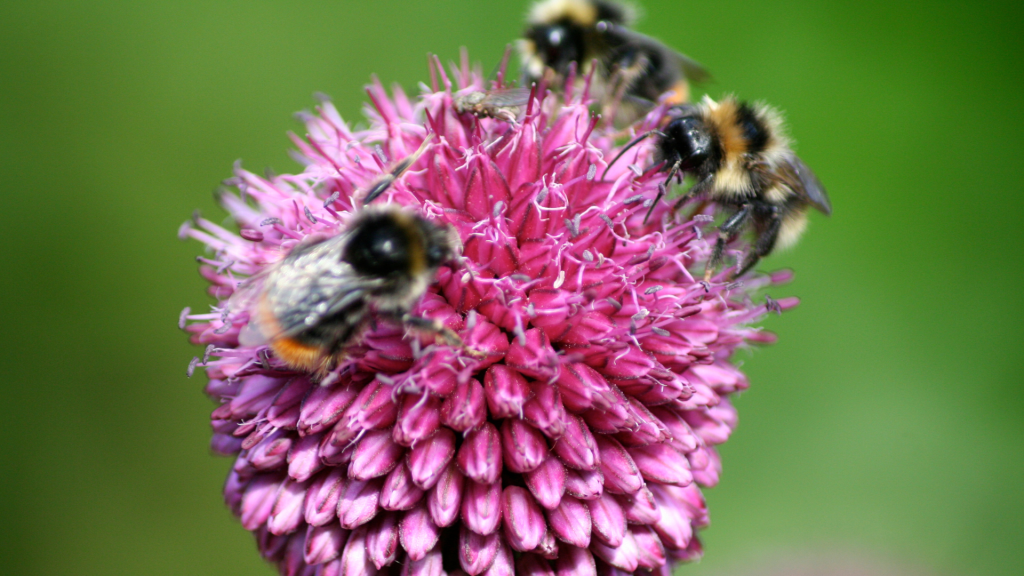
While alliums are generally sturdy, taller varieties may need staking in windy areas. Alliums are virtually pest-free and can even repel pests like aphids. However, thrips can occasionally be an issue.
Types of Alliums for St. John’s Gardens
Allium ‘Millenium’
- Zones: 4-8
- Height/Spread: 12 to 18 inches tall & wide
- Bloom Time: July-August
- Care: Prefers some light afternoon shade in warmer climates.
Allium giganteum (Giant Onion)
- Zones: 5-8
- Height/Spread: 3 to 5 feet tall, 1.5 to 2 feet wide
- Bloom Time: June to July
- Care: Needs shelter from strong winds or staking for support.
Allium ‘Gladiator’
- Zones: 4-8
- Height/Spread: 3 to 5 feet tall, 1.5 to 2 feet wide
- Bloom Time: June to July
- Care: Best planted in groups of 10 or more for a dramatic effect.
Allium cristophii (Star of Persia)
- Zones: 5-8
- Height/Spread: 12 to 24 inches tall, 6 to 18 inches wide
- Bloom Time: Late spring to early summer
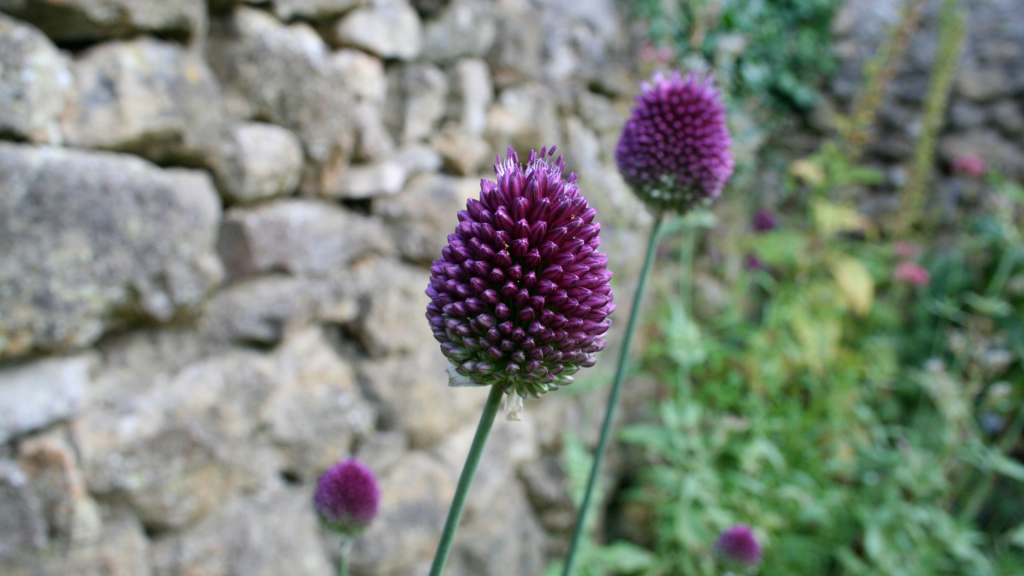
- Care: Its large, volleyball-sized flower heads are a striking addition to any garden.
Designing with Alliums
Mixing and Matching
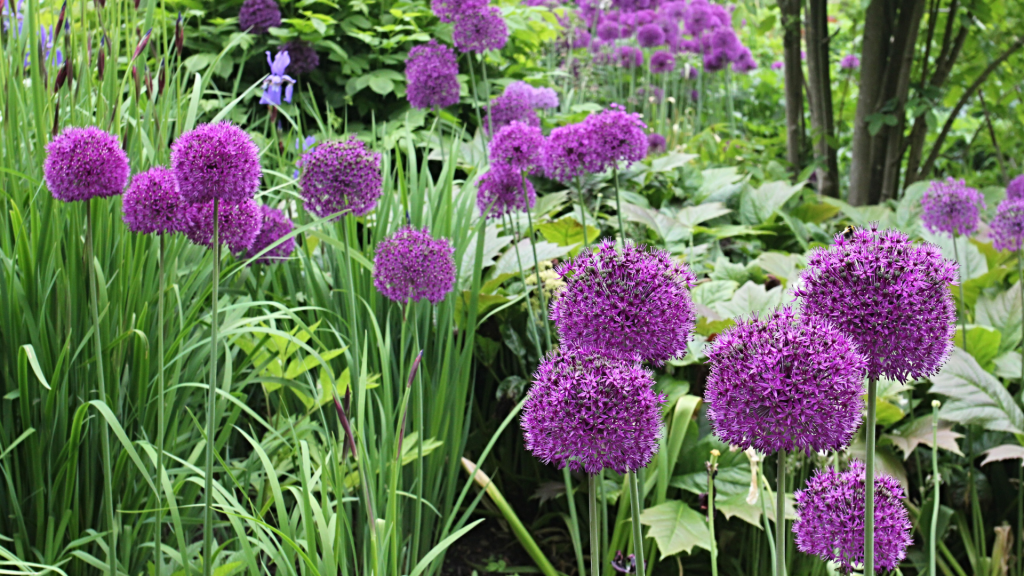
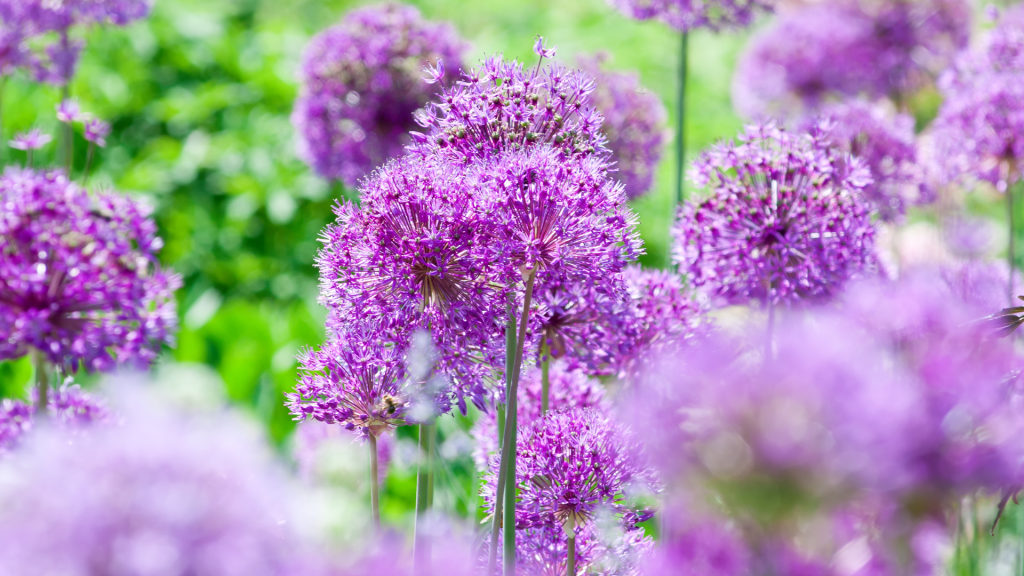
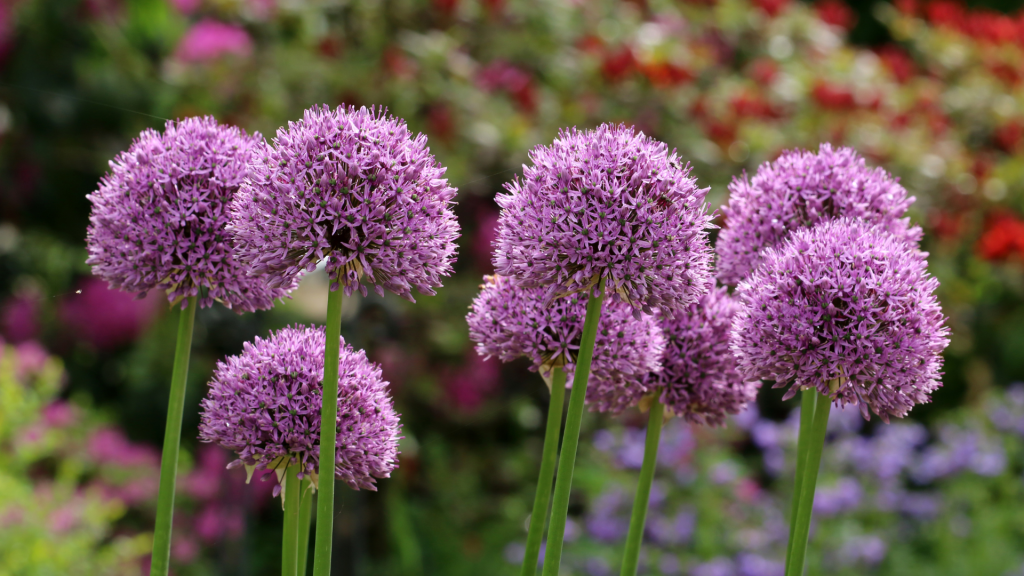
Alliums are versatile and can be mixed with a variety of plants. Pair them with lower-growing perennials like Nepeta and Geranium to hide their fading foliage. Their tall stems and spherical blooms add a three-dimensional aspect to your garden.
Repetition and Focal Points
Use the consistent height and flower-cluster size of alliums to create repetition in your garden. Planting them in groups of five or more can create a striking focal point.
Seasonal Transition
Alliums can serve as bridge plants, transitioning your garden from spring to summer. Combine them with spring bloomers and summer perennials for continuous colour and interest.
Deer-Resistant Garden
Combine alliums with other deer-resistant plants like lavender and ornamental grasses to create a garden that’s both beautiful and protected from hungry deer.
Conclusion
In the unique climate of St. John’s, Newfoundland, alliums can thrive and bring a touch of elegance to any garden. With their striking blooms, easy care, and versatility, these ornamental onions are a valuable addition to your gardening palette. Follow the detailed planting and care instructions to ensure your alliums flourish, and enjoy the vibrant, long-lasting beauty they bring to your outdoor space.
You can consult with our team at Bowering Gardens, lawn and garden experts in St. John’s, Newfoundland, to determine the best practices for your specific region and landscaping, or you can reach out to us below to get a quote so that we can take it off your hands entirely.
Please note that the information provided in this article is based on general guidelines. Specific care and conditions may vary for different varieties and individual gardens.
Frequently Asked Questions
The best time to plant allium bulbs is in the fall, a few weeks before the ground freezes, to ensure they establish roots before winter.
Plant allium bulbs twice as deep as the bulb is tall, with the pointy end facing up.
Alliums are generally tolerant of various soil types but prefer well-drained soil. Avoid planting in areas prone to waterlogging, especially during their dormant period.
Allow the foliage to die back naturally to provide essential nutrients to the bulbs for the next season. Plant alliums among perennials to hide the fading foliage.
Yes, alliums are pest-resistant due to their close relation to onions and garlic, which deter most pests with their scent.
Remember, gardening is not only about nurturing plants but also about embracing the joy and wonder that nature brings. Happy gardening!
Posted on
Posted in Blog
